
In a simple stroke, Tesco have captured several customer-delighters that resonate with consumer interests.
Their surprise checkout charges of 1p for products that would have been junked, have capitalised on a global concern with avoiding waste, besides adding a feel-good bonus to an impulse purchase on a routine shopping trip. Keeping the discount secret until payment means that the initiative and shopper expectation can be easily managed. Another application that might stimulate their banking offer might be the issuing of random 'double-your-money' payouts at their ATMs…
However, the real breakthrough will be in finding a way to apply the surprise deep-discount idea to food near its sell-by date, thereby touching an anti-waste live nerve that would transform impact their social image, with no appreciable downside….
Thursday, 23 September 2010

Wednesday, 22 September 2010
Tesco Banks on Financial Services

It will be trying to get its shoppers to sign up to its new savings account as it seeks to expand its 6.3m account base. Sir Terry Leahy has promised to build a “people’s bank” by capitalising on public disillusionment with traditional lenders. Next year it will expand its offering to mortgages and current accounts.
Whilst no one underestimates the infrastructure requirements (putting together regulatory teams, risk teams, compliance teams) necessary to operate as a trustworthy bank, Tesco has been helped by the fact that the global financial crisis has caused competing banks to level the playing field via a series of own-goals that have destroyed any residual trust by the public in financial service providers and banks in particular. Moreover, the savvy consumer is becoming more financially astute, and can appreciate the fact that banks charging 4 per cent for a fixed-rate mortgage when Bank of England base rate is 0.5 per cent and they pay just 0.23 per cent on consumer savings is a major abuse of power. This has to provide a major window for Tesco in the sector.
In these circumstances, Tesco simply has to build and maintain a financial competitive-edge ( i.e. offer slightly better rates, and gradually improve these rates as traditional banks are forced to follow, in their efforts to recover inevitable loss of share to Tesco). The rest is a no-brainer in terms of the provision of levels of personal service that will easily differentiate Tesco from any retail bank in the country…
However, the real challenge for Tesco will be to manage consumer expectation by growing their banking service slowly rather than at high speed (i.e. resist 'knock-out' interest rates).This opportunity will continue to be available as long as traditional banks remain in denial, and patently out-of-touch with customer-need.
Friday, 17 September 2010
Sometimes a cut too far?
Following on from travel bans, dust clouds and general cut-backs, NAMs and KAMs may have been forced to consider the budget airlines alternative. Here the search for cheap-flights will have revealed a culture more akin to their dealings with some major customers.
This has led the budget airlines to consider 'standing-room only', replacement of co-pilots with suitably-trained stewardesses (could help by making the tea between crises) and shorter-seats, apart from the obvious 'paying a pound to spend a penny'.
Incidentally, it may not be well-known that airline-chiefs can have outside interests such as classical music that may benefit from their attentions using a similar approach to cost-cutting.
Pls see the following letter allegedly written by a high profile CEO....
Schubert’s No.8 in B Minor
To the Chairman, The London Symphony Orchestra
After attending a rehearsal of this work, we make the following recommendations
1 We note that the twelve first violins were playing identical notes, as were the second violins. Three violins in each section, suitably amplified, would seem to us to be adequate.
2 Much unnecessary labour is involved in the number of demisemiquavers in this work. We suggest that many of these could be rounded up to the nearest semiquaver, thus saving practice time for the individual player and rehearsal time for the entire ensemble. This simplification would also make more use of trainee and less-skilled players with only marginal loss of precision.
3 We could find no productivity value in string passages being repeated by the horns; all tutti repeats could also be eliminated without any reduction in efficiency.
4 In so labour-intensive an undertaking as a symphony, we regard the long oboe tacet passages to be extremely wasteful. What notes this instrument is required to play, could, subject to a satisfactory demarcation conference with the Musicians’ Union, be shared out equitably with the other instruments.
Conclusion
If the above recommendations are implemented, the piece under consideration could be played through in less than half an hour, with concomitant savings in lighting, heating and overtime, wear and tear on the instruments and hall rental fees. Also had the composer been aware of modern cost-effective procedures, he might well have finished this work…
Seriously, budget airlines, in response to market demand are simply trying to cut to the bone, and are offering the customer what they want to pay for.
Being criticised by their customers for the resulting cut-down package is unfair when they are simply delivering a slightly more abrupt version of the indifference provided by mainstream airlines…
Have a high-value weekend, from the Namnews Team!
This has led the budget airlines to consider 'standing-room only', replacement of co-pilots with suitably-trained stewardesses (could help by making the tea between crises) and shorter-seats, apart from the obvious 'paying a pound to spend a penny'.
Incidentally, it may not be well-known that airline-chiefs can have outside interests such as classical music that may benefit from their attentions using a similar approach to cost-cutting.
Pls see the following letter allegedly written by a high profile CEO....
Schubert’s No.8 in B Minor
To the Chairman, The London Symphony Orchestra
After attending a rehearsal of this work, we make the following recommendations
1 We note that the twelve first violins were playing identical notes, as were the second violins. Three violins in each section, suitably amplified, would seem to us to be adequate.
2 Much unnecessary labour is involved in the number of demisemiquavers in this work. We suggest that many of these could be rounded up to the nearest semiquaver, thus saving practice time for the individual player and rehearsal time for the entire ensemble. This simplification would also make more use of trainee and less-skilled players with only marginal loss of precision.
3 We could find no productivity value in string passages being repeated by the horns; all tutti repeats could also be eliminated without any reduction in efficiency.
4 In so labour-intensive an undertaking as a symphony, we regard the long oboe tacet passages to be extremely wasteful. What notes this instrument is required to play, could, subject to a satisfactory demarcation conference with the Musicians’ Union, be shared out equitably with the other instruments.
Conclusion
If the above recommendations are implemented, the piece under consideration could be played through in less than half an hour, with concomitant savings in lighting, heating and overtime, wear and tear on the instruments and hall rental fees. Also had the composer been aware of modern cost-effective procedures, he might well have finished this work…
Seriously, budget airlines, in response to market demand are simply trying to cut to the bone, and are offering the customer what they want to pay for.
Being criticised by their customers for the resulting cut-down package is unfair when they are simply delivering a slightly more abrupt version of the indifference provided by mainstream airlines…
Have a high-value weekend, from the Namnews Team!
Friday, 10 September 2010
German farmer's 24/7 hour milk filling station a hit !

Have a savvy weekend, from the Namnews Team!
Friday, 3 September 2010
When getting away means staying in touch

In fact, Bhutan, landlocked between India and Tibet, is one of the most isolated nations in the world. However, in the country's Amankora lodges there are no TVs, no radios, but if a guest needs it you can get high-speed internet access….
Whilst much of this traffic-watching is allegedly social, most of us know that the odd job-related holiday email, can be a career-maker, or breaker….
Have an intouch weekend, from the Namnews Team!
Thursday, 26 August 2010
20/20 Hindsight reveals a quiet revolution…
A change of CEO in a major retailer has a radical influence on the customer, its key competitors…and especially suppliers' trade management strategies…
But how about three major multiples' CEOs moving on, and the resulting management team-changes reflecting similar changes in a fourth player likely to be taken over by a major shareholder…?
Add to this mix a need for 'new' to signal change, in the midst of global financial upheaval, and it becomes 'obvious' that the UK retail landscape is being quietly turned upside down….
Also, change of this degree means everyone can be equal, each at square one..
These unprecedented changes will have rendered obsolete your trade management strategies…
Unless, of course you anticipated these developments two years ago…
Have a 'what-if' weekend, from the Namnews Team!
But how about three major multiples' CEOs moving on, and the resulting management team-changes reflecting similar changes in a fourth player likely to be taken over by a major shareholder…?
Add to this mix a need for 'new' to signal change, in the midst of global financial upheaval, and it becomes 'obvious' that the UK retail landscape is being quietly turned upside down….
Also, change of this degree means everyone can be equal, each at square one..
These unprecedented changes will have rendered obsolete your trade management strategies…
Unless, of course you anticipated these developments two years ago…
Have a 'what-if' weekend, from the Namnews Team!
Monday, 23 August 2010
Green Shoots on a Blue High Street?

Pic: Sarah Lee for the Guardian
News that 40% of Woolworths former stores are still empty, is possibly 'proof' of a spent business model, despite a possible resurgence of the brand online. The remaining 60% of outlets spread over several trade sectors, means that traditional Wollies categories will end up in increased trade concentration, adding to the negotiating muscle of the major retailers. Another result of a 10% over-capacity in retail space has been more realistic rental concessions from formerly 'upward-only' landlords, mindful of the impact of empty shops on consumer demand. Meanwhile, this wake-up call for all retail business models has created opportunities for Pound shops, making them a permanent feature of the retail landscape, all in response to the demonstrable value-for-money demands of the savvy consumer.
Suppliers that have managed the transition to profitable management of a more demanding customer-mix have done so by stripping down their basic offering to meet real need, and ruthless elimination of all surplus, before the market did it for them.
Insisting on fair-share partnerships with the survivors then became a no-brainer..
In other words, if you are still here, as one of the strong players you deserve and must demand a game with equal trade-partners, ……or else!
Friday, 20 August 2010
Managing demands for extra credit via the customer's bank…

This helps your cashflow, great! (But at what cost?)
However, given that banks are not in the free-lunch business, they will presumably take a discount off the invoice for the privilege.
Suppose you present an invoice due for payment in 60 days, and the bank takes 1% off-invoice, you are in fact paying 1% for 60 days money.
Given there are 365 days in a year, this 1% translates into a rate of 6% per annum for the money, i.e. 6 x % off invoice…..
In the same way, a 2% off-invoice = 12%, a 3% off-invoice = 18%, etc.
The above chart shows how to calculate the annual interest cost on different off-invoice rates and different payment period savings.
Each line represents a different off-invoice rate, and the left-hand axis gives the equivalent annual rate for the money.
Simply select the off-invoice rate being charged by the bank, then follow the line to where it crosses the line representing the number of days of the invoice, on bottom axis.
Then read the annual rate on the left-hand axis. This tells you the annual rate you are paying for the privilege of getting paid early.
This off-invoice charge thus becomes an additional cost of dealing with the customer, thereby unbalancing the status quo, the fair-share negotiation principle with your trade partner….
You owe it to yourself to really understand the money….
Have a 'get real' weekend, from the Namnews Team!
Monday, 16 August 2010
M&S extension of credit terms from suppliers
News from The Telegraph that the company has apparently told 860 companies that provide it with 'general merchandise' – clothing, shoes and household goods – that from next month, payment terms will be extended. Suppliers shipping goods to M&S and firms that help the retailer with storage and distribution, have been paid within 30 days of submitting an invoice. But from the start of September, M&S is promising to pay only within 60 days.
Impact:
Suppose supplier sells £2.5m per annum to M&S, 30 days credit
Cost of interest = 9%
Average amount outstanding = £208,000 i.e £2.5m/12
Therefore cost of credit = £18,750 i.e. £208,000 x 9%
Credit period extended to 60 days
Average amount outstanding = £416,000
Cost of credit = £37,500
Therefore additional cost = £18,750
= 0.75% of suppliers sales = additional cost to serve
Incremental sales by supplier to cover of additional credit = £187,500, assuming 10% net profit
(See NamCalc for this & 33 extra tools to calculate total cost to serve)
Incremental sales by M&S to generate gain from supplier extra credit = £257,554, based on M&S Net Profit of 7.28%, latest published accounts
In other words, the supplier has several options:
1. Object to the new terms: if nothing else changes, the supplier is handing over £18,750 (see Fair share negotiation video) Not to object can send a signal that even more extra credit should have been requested.
2. Demand equivalent value from customer, ability to generate additional sales of £187,500 to customer, at no extra cost
3. Walk away…... (Work out incremental sales required from other customers to cover lost sales, conduct 'what-ifs on same additional credit period being extended to other customers ) and challenge basic business model.
Impact:
Suppose supplier sells £2.5m per annum to M&S, 30 days credit
Cost of interest = 9%
Average amount outstanding = £208,000 i.e £2.5m/12
Therefore cost of credit = £18,750 i.e. £208,000 x 9%
Credit period extended to 60 days
Average amount outstanding = £416,000
Cost of credit = £37,500
Therefore additional cost = £18,750
= 0.75% of suppliers sales = additional cost to serve
Incremental sales by supplier to cover of additional credit = £187,500, assuming 10% net profit
(See NamCalc for this & 33 extra tools to calculate total cost to serve)
Incremental sales by M&S to generate gain from supplier extra credit = £257,554, based on M&S Net Profit of 7.28%, latest published accounts
In other words, the supplier has several options:
1. Object to the new terms: if nothing else changes, the supplier is handing over £18,750 (see Fair share negotiation video) Not to object can send a signal that even more extra credit should have been requested.
2. Demand equivalent value from customer, ability to generate additional sales of £187,500 to customer, at no extra cost
3. Walk away…... (Work out incremental sales required from other customers to cover lost sales, conduct 'what-ifs on same additional credit period being extended to other customers ) and challenge basic business model.
Friday, 13 August 2010

Thursday, 12 August 2010
Global Account Management of Tesco: keeping it in perspective
Imagine a circle that contains all of human knowledge ref Tesco:

As a consumer, you know a little:

By the time you become a Tesco Account Executive, you know a bit more:

As a Tesco National Account Manager, you gain some specialised knowledge:

A Tesco Senior NAM


Once you're at the boundary, you focus:

You push at the boundary for a few years:

Until one day, the boundary gives way, allowing some original thinking:

And, that dent you've made is called Global Account Management of Tesco:

Of course, the Tesco world looks different to you now:

So, don't forget the bigger picture:

Keep pushing, and reading…...
Adapted, with apologies, from “The illustrated guide to a Ph.D” at
Tuesday, 10 August 2010
Marmite now costs more than a gallon of petrol

In the same way headline performance figures i.e. 'green shoots', are averages, hiding not only negative performance, but also 'above-average' growth opportunities in individual categories or retail sectors.
Hence, many growth opportunities already exist, for those able to see though the averages….
....as indeed, misjudging market-price tolerance can cause consumers to vote with their feet..?

Thursday, 5 August 2010
Breath-test required for vending machine wine sales

The state is currently testing a vending machine that holds 1,000 bottles of 55 wines. Following selection of a bottle, customers must insert a driver's licence to show they are over 21, then submit to video-linking for verification of identity by a member of the Pennsylvania Liquor Control Board. Next customers must blow into a breathalyser to make sure their breath-alcohol level is not more than 0.02, or just one quarter the legal limit for driving. If it is, the sale will be denied.
Apparently, Family planning authorities have thus far shown little interest in adapting the machine to dispense other weekend requisites…
Have an imaginative weekend, from the Namnews Team!
Tuesday, 3 August 2010
Tesco's Glasgow airport move a mere toe-in-the-water?
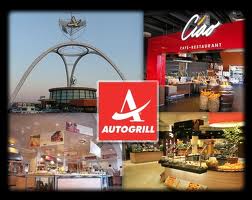
For instance, with sales of €5.8bn and a market cap. of €2.5bn, Autogrill may present a no-brainer opportunity to leap forward on a number of fronts.
Think about it:
Autogrill SpA is an Italian company involved in the restaurants sector. The Company operates mainly in three sectors of activities: Food & Beverage, Travel Retail & Duty free and In-flight. In the Food & Beverage division its offer includes restaurants supplies, sale of daily use products such as newspapers and magazines, cigarettes, etc, offered to people travelling by plane, train or car. Travel Retail & Duty free offers products consisting primarily of fragrances and cosmetics, spirits, tobacco and confectionary. The In-flight Catering division is involved in the supply of catering products for over 100 airlines. The Company operates over 5,500 points of sale in over 1,200 locations. The Company operates also railway outlets in Europe. In addition, it operates in shopping centers, trade fairs and high streets. The Company's direct subsidiaries include Autogrill Deutschland GmbH, HMSHost Sweden AB, Restair UK Ltd, Autogrill Hellas EPE and Nuova Sidap Srl.
And think of the scope for Clubcard promotions…
(See Ci Corporate Information for a financial report on Autogrill or go direct to Autogrill for latest annual report)
Monday, 2 August 2010
Dublin: Arnotts in the rare auld times…

Arnotts was not merely a retail store, it was a tradition and a way of life for many Irish shoppers, like many department stores in the UK and Ireland. However, the model is no longer suited to modern retailing from the perspective of the savvy consumer.
Suppliers that are heavily dependant upon this route to consumer should perhaps factor the inevitability of decline and switch of business to mass retail into their own business models…..
If in doubt, why not try a 'what if' on the possibility of your bank manager being responsible for business strategy?
Subscribe to:
Posts (Atom)