Thursday, 17 February 2022

Price Rises Drive Growth At Nestlé, With More To Come

The world’s largest food manufacturer has posted its strongest growth in developed markets in a decade as it benefitted from price rises and robust demand for coffee, pet food, and vegan products.

Over the year to 31 December, Nestlé’s sales rose 7.5% on an organic basis to CHF87.1bn (€83.2bn), of which 2% came from price increases to offset “significant cost inflation”. This trend accelerated in the final quarter of the year, with prices up 3.1%.

The group stated that growth was also supported by continued momentum in retail sales, a steady recovery of out-of-home channels, and market share gains.

Nestlé’s coffee business was the single largest contributor to growth in 2021. Sales of Starbucks-branded products jumped 17.1% to CHF3.1bn, whilst the Nespresso division reported growth of 8.8% to CHF6.4bn


NamNews Implications:
  • Nestlé is big enough in most markets to be able to ensure appropriate price rises across its brand and retail portfolios.
  • “Significant cost inflation” has been factored into its price increases…
  • …in a “super volatile environment”.
  • Rivals need to reassess relative competitive appeal, by category, retailer and geography…
  • ..Now
#ShelfPriceInflation #CostPriceInflation #Negotiation #Power

Tuesday, 15 February 2022

Sale Of MFG Moving Forward

Following recent rumours, it appears that the £5bn sale of Motor Fuel Group (MFG), the forecourt operator controlled by the new owners of Morrisons, is going ahead.

According to Sky News, Clayton, Dubilier & Rice (CD&R) has lined up Citi, Deutsche Bank, Goldman Sachs, and Royal Bank of Canada to sell MFG, which operates around 900 sites across the UK.

MFG has grown substantially since CD&R bought it in 2015 for £500m. Three years later, the private equity firm paid £1.2bn to add MRH, the market leader, creating a group operating under fuel brands such as BP, Esso, Shell and Texaco.

MFG’s profits are understood to have risen about tenfold since CD&R’s acquisition with the company investing heavily in its convenience retailing proposition, featuring the likes of Costa Coffee, Greggs and Subway at many of its sites.

NamNews Implications:
  • MFG will be an attractive acquisition for either fuel companies or PE.
  • Either way, any supplier-MFG relationships will be financially driven…
  • …in order to maintain the profit impetus.
  • Therefore NAMs need to refine their skills in counting cost…
  • …and demonstrating the value of their proposals to MFG’s finances.
#Divestment #FinancialKPIs #GarageForeCourt

Friday, 11 February 2022

Morrisons Introduces Plastic-Free Toilet And Kitchen Roll Packaging

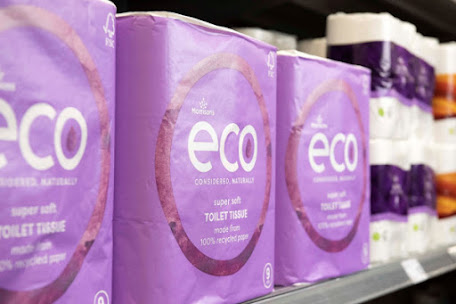
Morrisons has launched paper-wrapped toilet and kitchen rolls as part of its drive to reduce plastic waste.

The paper packaging, which is responsibly sourced and FSC certified, is fully recyclable with the toilet paper and kitchen sheets themselves are also made using recycled paper.

Morrisons jumbo kitchen rolls cost £3 (for a two pack) and the toilet rolls £3.50 (for a nine pack). The retailer highlighted that this is much cheaper than some other eco paper-wrapped products which can be as high as £2.80 for a single kitchen roll and £9 for nine toilet rolls.

NamNews Implications:
  • Given the extent to which tissue is a narrow-margin business…
  • …this pricing differential is going to be problematic…
  • …at least for suppliers.
#BrandOwnLabelPremia #TissueProfitability #ScaleEconomies

Wednesday, 9 February 2022

Amazon Must Now Comply With GSCOP


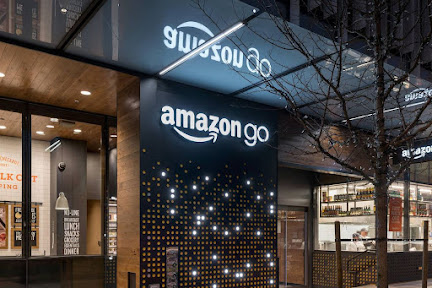
Amazon’s increasing activity in the UK grocery sector has led the Competition and Markets Authority (CMA) to designate the online giant under the Groceries Market Investigation Order (the Order).

As a result, Amazon and its UK subsidiaries must now comply with the Groceries Supply Code of Practice (GSCOP).

The Code applies to retailers with an annual turnover of more than £1bn from grocery sales and aims to ensure that they treat their suppliers fairly.

NamNews Implications:
  • Key is the extent to which Amazon feels responsible for the actions of all of its vendors…
  • All else is detail...
#GSCOP #AmazonCompliance #AmazonEntersMainstreamRetail

Amazon Sales In The UK Up 82% On Pre-Pandemic Levels

An annual report SEC filing by Amazon last week shows just how popular the online retailer became in the UK during the pandemic. 

Over the year to 31 December 2021, Amazon’s net sales in the UK rose 20.5% to $31.9bn (£23.6bn). However, compared to two years ago before the start of the pandemic, the figure is up 82.1% from $17.5bn (£13.0bn).

Patrick O’Brien, research director at GlobalData, commented: “While other major digital players appear to have peaked earlier in the pandemic, UK consumers show little let-up in their reliance on Amazon. It’s a very strong performance against an exceptional comparative.”


NamNews Implications:
  • No surprises, hopefully…
  • Given their high degree of customer-centricity.
  • And saturation coverage.
  • Trickling down into cost-effective fulfilment.
  • With rivals trailing behind.
  •  Best for suppliers to be on board optimising this mix…
  • …rather than trying to build up Amazon rivals in order to spread risk.
#AmazonResults #OnlineOnwards

Friday, 4 February 2022

Amazon Hikes Price Of Prime Membership In US To Offset Rising Costs

The price for annual membership is rising by 17% to $139, with the online giant blaming increased labour and shipping costs. The group stated that it had no announcements to make about other countries “at this time”.

NamNews Implications:
  • As always, nothing is for nothing…
  • And pipeline cost increases have to be reflected in prices, eventually…
  • Unlikely that these increases will diminish Amazon Prime appeal…
  • …given the convenience.
#amazon #PrimePriceIncrease

Wednesday, 2 February 2022

Shop Prices Rise At Fastest Pace Since 2012

The latest BRC-NielsenIQ Shop Price Index confirms that inflation is accelerating in both the food and non-food retail sectors.

The overall figure rose from 0.8% in December to 1.5% in January, the highest rate of inflation recorded by the index since December 2012.

Official figures last month showed that wider consumer inflation jumped to 5.4% in December, the highest rate for 30 years, driven up by higher energy costs and rising retail prices.

The BRC and NielsenIQ figures are based on price changes of commonly bought items in retail stores. They showed that food inflation increased from 2.4% to 2.7% in January, the highest inflation rate since October 2013.

NamNews Implications:

  • From a NAM’s POV, the issue is how consumers view ‘real’ on-shelf inflation.
  • i.e. inflation that affects their purchasing behaviour and hence demand.
  • And street-level inflation is perceived to be running at 5%-10%, with more to come…
  • And any action by the Bank of England to curb inflation will be a further deterrent to spending…
  • See 'Pound-in-your-pocket Inflation' for more details

#PoundInYourPocketInflation

Monday, 31 January 2022

Businesses Braced For Insolvency Storm As Pandemic Aid And Protection Is Shut Off

589,168 businesses in the UK reported significant financial distress during the final quarter of 2021, a 5% rise on the previous three months.

This is according to Begbies Traynor’s ‘Red Flag Alert’ (monitors financial health of UK companies). The latest research shows Lockdown fault lines.

Data indicates that the debt storm which has been brewing for years, but had been held off by measures to provide breathing space for companies, could now be about to hit, sending shockwaves through many industries.

Julie Palmer, a partner at Begbies Traynor, said: “Businesses that have bravely battled through the pandemic could now start to fail as the pressures they face become too much. Support from the Government such as furlough payments, tax reliefs and a moratorium on landlords being able to evict businesses due to rent arrears cannot go on forever.

“Without these measures in place to protect them, a rising number of companies will have no other option but to relinquish their business after two years of struggling on in the economic uncertainty that has been tempered by measures to combat the impact of coronavirus.

“The lag effect of the economic fallout from Covid, plus significantly higher inflation, has created a perfect economic storm for many companies, particularly the UK’s SME sector, which will undoubtedly drive insolvency rates even higher.”

Inflation is now the greatest threat to the economy with the true rate potentially running far beyond the official 5.4% rate and possibly many multiples more than the Bank of England’s target of 2%. Rising wage, energy and materials costs mean the CPI figures are showing only part of the story in the UK and the subsequent impact on the public’s disposable income is expected to be far greater.

Despite Government support measures unwinding, Palmer said there are indications that the authorities are willing to help businesses that are trying to fight on. She added: “Anecdotally, we are hearing stories about HMRC giving companies two or even three years to pay their tax bills.

“Extra leniency may not be an official policy, but it sends a signal that officials are trying to help businesses survive – even though it might only be delaying the inevitable.”

NamNews Implications:
  • We repeat: ‘589,168 businesses in the UK reported significant financial distress during the final quarter of 2021, a 5% rise on the previous three months’.
  • This is going to affect your business, in terms of customers and rivals.
  • To place the issue in context, calculate the incremental sales required to replace your losses from a customer:
  • i.e. Divide outstanding credit by your Net Profit before Tax %, and multiply by 100.
  • Then apply this formula to each customer you manage…
  • (Meanwhile, furlough payments, tax reliefs and a moratorium on landlords being able to evict businesses due to rent arrears cannot go on forever)
  • What now Boris?

Friday, 21 January 2022

Princes Moves Into The Frozen Aisle

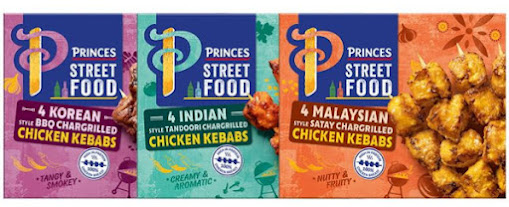
Princes, the company best known for its canned food, is making its debut in the frozen aisle with a new range of meat kebabs.

Called Princes Street Food, the range of frozen marinated kebabs comes in three flavours: Indian Tandoori Chargrilled Chicken Kebabs, Korean Style BBQ Chargrilled Chicken Kebabs and Malaysian Style Satay Chargrilled Chicken Kebabs (RSP: £3.75/260g).

NamNews Implications:

  • Princes is coming to this category…
  • ...without the baggage of a pre-HFSS product having to be reformulated (taste/texture).
  • - with no history other than canned.
  • - i.e. a clean slate and no preconceived notions.
  • From there, anything is possible...
  • And provided the spec and execution resonate with consumers (and trade), and always delivers more than it says on the 'tin'…
  • …this could be interesting.

#CleanSlateMarketing #ScratchMarketing

Tuesday, 18 January 2022

Aldi Opens Doors To New Checkout-Free Concept Store


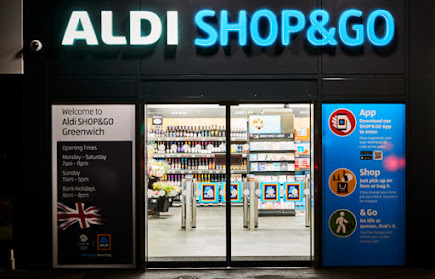
The Shop&Go concept store in Greenwich, London opened this morning for public testing, having been trialled by Aldi staff in recent months.

Using the Aldi Shop&Go app, customers can enter the store, pick up their items, and then walk out when they have completed their shop. Once the customer leaves the store, they will then be automatically charged for their shopping via their selected payment method and a receipt will appear in the app.

NamNews Implications:
  • The tech is already here…
  • …along with the cost-saving on personal checkout operators.
  • (to say nothing of all that shopper data…)
  • So think ahead to an inevitable life of fully automated checkout process, everywhere…
  • Whilst Aldi maintain the same price-differential…
  • …and discounter advantage.
#AutomatedShop #FrictionlessShopping #AldiCompetitiveAdvantage

Friday, 14 January 2022

Tesco Commits To Keeping Prices Down, With Help Of Suppliers

The pledge by Tesco – echoing that of Sainsbury’s, Lidl and Aldi in recent days – suggests the sector faces a price war at a time when suppliers are looking to pass on higher commodity and supply chain expenses.

Tesco stated that it will try to mitigate inflation for consumers through its cost-saving programme. The retailer also plans to buy stock in larger volumes and vowed to work collaboratively with suppliers to keep down prices.

NamNews Implications:
  • One could say that in keeping prices down for the past 10 years…
  • …state-of-art retailers have exhausted all slack in the efficiency system…
  • …meaning there is little further scope for squeezing savings.
  • Besides which, as suppliers know, scale purchasing can rarely translate into significant price discounts..
  • Meanwhile, with very real inflationary costs already in the system…
  • …the market has to move prices in tandem, obviously by instinct rather than by discussion.
  • In which case, it only takes one retailer holding back on price increases to gain a real competitive advantage…
  • (Say a discounter large enough to lower profits at the expense of its global portfolio)
  • i.e. Hold onto your hats, folks!

#Inflation #Competition #SupplierFairShare #GSCOP


Tuesday, 11 January 2022

Aldi Won Christmas On Social Media

Analysis by Social Media Management platform Maybe* ranked the major supermarkets according to those who most successfully engaged customers from social media posts across Facebook, Twitter and Instagram.

The analysis showed that whether it was gin or caterpillar shaped birthday cakes, Aldi led the way throughout 2021 in the social media stakes with its ongoing disputes with Marks & Spencer.

NamNews Implications:
  • Humour: a high-risk, high payoff strategy.
  • Requires careful handling, reader-insight, and generosity...
  • …but ‘Bingo’ if it strikes a chord.
  • (and is worth/easy to pass on/re-share)
  • We are entering even more serious, inflationary times...
  • ...but well-placed humour has to pay dividends.
  •  But it needs to translate to sales, rather than simply leave a warm glow...
  • (but feeling better helps!)
#Controversy #competition #Humour

Friday, 7 January 2022

Recovery Continues At Boots Ahead Of Potential Sale

Walgreens Boots Alliance (WBA) raised its full-year profit guidance yesterday after both its US and UK businesses delivered better-than-expected sales performance during its first quarter, aided by vaccination activity and surging online sales.

In the UK, comparable retail sales at Boots jumped 16.3%, recovering from the significant declines last year when its high street and travel sites were impacted by lockdowns, and shoppers turned to supermarkets for their health & beauty needs.

NamNews Implications:

  • Clearly the future of Boots lies in success online…
  • (and optimising their consumer franchise in terms of patient/healthcare)
  • Especially given the assessment anticipated from Private Equity companies.
  • Meanwhile, suppliers proposing online-based initiatives will have the most appeal in the current situation…

#BootsTakeover #BootsFuture

Wednesday, 5 January 2022

Tesco And Discounters Best Performers Over Christmas Period; Supermarkets See Record Own Label Sales As Inflation Accelerates

Given weaker overall sales than 2020 when Covid restrictions boosted demand in supermarkets to record levels, the market share data from Kantar showed consumers treated themselves during the festive season, but with more premium own-label ranges as inflation in the sector pushed up the cost of grocery shopping.

NamNews Implications:
  • Note Tesco Finest & Sainsbury’s Taste the Difference as premium O/L performers
  • (particularly if you subscribe to the belief they are better than National Brands…)
  • Also ‘grocery price inflation reached 3.5% in December’ as a rehearsal for Inflation-2022!
  • …driving discounter share growth resulting from an inevitable discounter-driven price war.
  • As always, key is how your Christmas sales compared, by format and category.
#LatestGroceryShares #ChristmasTrading2021

Tuesday, 7 December 2021

Consumers Buying More Premium Own-Label Ranges Despite Rising Prices; Tesco And Discounters Gain Share

All the major grocery retailers in the UK saw their sales fall over the 12 weeks to 28 November against tough comparatives with last year when Covid restrictions were reintroduced. The data from Kantar also suggests that rising food prices aren’t impacting people’s desire to treat themselves over the festive period.

Take home grocery sales fell by 3.8% during the period as consumers ate out more compared with 2020. However, sales remain strong compared with the market before the pandemic, and grocery spend was 7.0% higher in the latest 12 weeks than in 2019.

NamNews Implications:
  • Key issue is growth of premium private label at the expense of equivalent national brands.
  • The fact that the quality of premium private label can be equal or even better than national brands at the same price…
  • …means better value for money…
  • …and probably a permanent shift in allegiance.
  • A backdrop of the remorseless growth of online and the discounters…
  • …where higher pipeline inflation has not really kicked in yet.
  • Means seatbelt tightening a default option for 2022…
#PremiumPrivateLabel #DiscounterShare #OnlineShare