Thursday, 12 May 2022

Private Label Loyalists Now Equals Those Of Brands

Amid the current cost of living crisis, new research shows that supermarket private label loyalists (shoppers that buy them over 75% of the time) are now equal those of national brands loyalists in all key European markets.

According to a new report from IRI called Private Labels: Hiding in Plain Sight, around 50% of shoppers switch between both with most now appearing in the mid-income bracket, but also with high-income cohorts in France and Germany. Private label shoppers are looking beyond price. Where they intend to spend more or less in 2022 and beyond is in line with wider category trends.

The study highlights that modern private label brands have evolved from their origins 40 years ago and developed into strategy-focused, differentiated, data-driven, and consumer-obsessed brands. Private labels are gaining ground in value sales, market penetration, consumer value and retail experience, while closing the gap on instantly recognisable national labels.

According to IRI, private labels now occupy a global category footprint of 16.5% of FMCG value sales. Driven by several growth factors, private labels are said to offer the same or better quality, affordability, healthier options, consumer acceptance, and portfolio stratification into Premium.

With the highest penetration in Spain (44%) and Germany (38%), private labels make up 35% of total FMCG sales in Europe, equating to €194bn. Germany records the highest absolute value (around €60bn), followed by the UK (€43bn).

The report notes that private labels have become a substitute in several growth categories for many national brands having undergone a significant transformation that focuses on quality, trust, environmental credentials, innovation, and delivery on claims.

In certain categories, such as beauty, vitamins and supplements, and alternative remedies for example, private labels often lead in innovation, which is then followed by national brands.

Ananda Roy, International Senior VP, Strategic Growth Insights at IRI, said: “Private labels may not be instantly recognisable brand names, but the fact is they don’t need to be. Retailers have re-imagined what consumers can expect from them in every supermarket aisle. They offer considerable value to shoppers who are not entirely price-driven by delivering quality, product performance and premium innovations which are comparable to the bigger, more established national brands.

“They compete for growth and margin on near equal terms and often present worthy competitors that are perhaps not fully acknowledged by the big brand owners. Private label brands are basically hiding in plain sight.”

Report highlights:

Pandemic chaos causes sales to slide, but positive outlook ahead – Consumer buying behaviour amid pandemic chaos provided a transient boost to national brands, causing private label value sales to fall. During 2018-2019, private labels experienced strong value sales growth (+8% and +11.3% respectively). However, this tapered off during the early stages of the Covid crisis as consumers opted for trusted national brands amid uncertainty – value sales dropped 1% in 2020 (value share 35.2%) and 1.4% in 2021 (value share 34.6%).

However, IRI believes there is a distinctly positive outlook ahead as this trend is likely to be dampened and possibly reversed as national brands raise prices to counter inflationary headwinds and private labels return to growth.

Strategic drivers of growth – Growth in private labels has accelerated due to established retailer equity and trust, transparent pricing and consistent availability across national store portfolios. Edible and non-edible private label products are often manufactured under white-label arrangements alongside national brands. Consumers are receiving the same high-quality products they would if buying a national brand in terms of product performance, and in the case of edibles, taste, quality, and healthy options often match those of rival national brands.

Occasionally, if things do go wrong, consumers also receive the exact same consumer protections (returns, refunds and goodwill gestures) from retailers as they would from national brands. This has helped narrow the value and equity gap with national brands significantly.

Price wars looming – Small and mid-sized manufacturers are likely to lose consumers, volume and value to large manufacturers and private labels who are expected to mitigate inflation and maintain availability, despite ingredient shortages and supply-side disruptions. This creates the real possibility of price wars in the remaining half of 2022 with private labels having the potential to capitalise on inflationary trends.

Innovation is the new battleground – Private labels are often leading innovation in high-margin categories, such as Bakery, Beverages, Beauty, Vitamins and Supplements and over the counter healthcare remedies. IRI’s research shows that consumers found shopping in-store for private labels easier owing to clean labelling and clear ingredients. This made the experience more enjoyable and less confusing than having to shop amongst the confusing array and proliferation of packs, offers and formats among national brands. Shoppers say the gap between private label and national brands is narrower still when shopping online due to the platforms and mechanics being identical.

IRI expects new innovations to make private labels even more competitive as they take advantage of quick commerce, shoppable recipes, meal kits and leveraging retail media, all of which offer new routes-to-market, attraction of higher-income shoppers, and lower cost-of-sales.

Beyond retailers, Quick Commerce players are now creating their own private labels as seen recently in the UK by the launch of Jiffy’s bakery range.

Non-edibles lead recovery – Growth has been led by Italy (+3.4%) and Spain (+1%) and lagged in France and the Netherlands (-4%). However, there is evidence of a soft recovery, particularly in non-edibles, which is being driven by the easing of Covid restrictions. This has risen by 1.2% in value sales over the last five weeks.

Actions for manufacturers and retailers

As private label enters 2022 with a competitive tailwind, IRI has outlined several strategic opportunities and actions:
  • Induce shoppers by trial and conversion of the 50% that regularly switch between private label and national brands.
  • Further mining of loyalty data to enrich shopper segmentation and tracking.
  • Invest more in retailer media to personalise promotions, experiences and track effectiveness.
  • Promote private labels as ‘better value’ based on quality, trust, innovation and sustainability credentials.
  • Make shopping for private labels quick, easy and fun by ensuring transparent pricing and clean labelling that helps clarify range, endorsements, innovative packaging and merchandising.
  • Disrupt product experience and route-to-market which are less easily substituted.
  • Partner with quick commerce leaders to create higher margins, bypass brands and distributors and create opportunities to offer a wider range of food and non-food products.
IRI’s ‘Private Labels: Hiding in Plain Sight’ report can be downloaded here.
NamNews Implications:
  • If retailers obey the normal brand ground rules…
  • …especially ‘always more than it says on the tin’…
  • …and focus on repeat sales via loyals…
  • …then own label sales and penetration will continue to increase.
  • Largely at the expense of less focused brands?
  • This IRI report is a worthwhile read…

Thursday, 5 May 2022

Cabinet Minister Tells Consumers To Buy Supermarket Value Brands To Cope With Living Cost Crisis


The cabinet minister that oversees food and farming has been accused of being out of touch after suggesting that consumers facing surging grocery and energy prices should buy supermarket value brands to cope.

After latest figures from the British Retail Consortium (BRC) showed that shop prices were increasing at their fastest rate since September 2011, George Eustice highlighted that the food industry was facing the knock-on effect of higher energy costs pushing up fertiliser and feed costs.

“Generally speaking, what people find is by going for some of the value brands they can actually contain and manage their household budget. It will undoubtedly put a pressure on household budgets and, of course, it comes on top of those high gas prices as well.”

He argued there was a “very, very competitive retail market with 10 big supermarkets and the four main ones competing very aggressively, particularly on some of the lower-cost, everyday value items for households, so things like spaghetti and ambient products – there’s a lot of competition to keep those prices down”.

Eustice added: “Where it gets harder is on things like chicken and poultry, and some fresh produce, where those increased feed costs do end up getting passed through the system because these people work on wafer-thin margins and they have to pass that cost through.”

Data released by NielsenIQ yesterday suggested that shoppers are already cutting back on alcohol and meat as household budgets come under pressure from the cost of living crisis. Consumers spent 7.8% less on chicken, beef, pork and fish in the four weeks to 23 April, whilst sales of beer, wine and spirits were down 15.9%.

Pat McFadden, a shadow Treasury minister, said Eustice’s comments were “woefully out of touch from a government with no solution to the cost-of-living crisis facing working people”.

He added: “People are seeing their wages fall, fuel and food costs rise, and families are worried about how to make ends meet.

It’s time for the government to get real help to people rather than comments that simply expose how little they understand about the real struggles people are facing to pay their bills.”

NamNews Implications: 
  • Presumably ‘Letting them eat cake’ is not an option…?
  • People are being driven to buy value brands at Tesco, Morrisons and Asda…
  • ..but may want to shop at Sainsbury’s, even Waitrose.
  • This growing tension between Needs and Wants will cause problems…
#HighInflation #ConsumerCoping? #Struggles

Saturday, 30 April 2022

Sainsbury’s Plays Down Impact Of On-Demand Delivery Services

Amid the significant hype and investment around rapid, on-demand grocery delivery firms, Sainsbury’s has suggested that the actual demand for such services is relatively limited.

Alongside its standard online grocery operation, the supermarket sells its products via Deliveroo, Uber Eats and its own Chop Chop service.

However, Sainsbury’s Chief Executive Simon Roberts revealed yesterday that on-demand doesn’t generate major sales volumes.

He said: “It’s built through the course of the year but in total terms, the size of our on-demand business is a bit more than the equivalent of two of our supermarkets.”

However, Sainsbury’s is now facing competition from a raft of start-ups, including Jiffy, Getir, Gorillas, GoPuff, and Zapp that vying to win on-demand spend by offering deliveries within minutes of ordering.

This has prompted traditional supermarket groups to rethink their business models and team up with the rapid delivery providers.

Roberts said Sainsbury’s was waiting to see how growth progresses in on-demand as consumer shopping behaviour starts to normalise as Covid concerns ease.

However, he insisted he was pleased with how Sainsbury’s own Chop Chop delivery service was performing. “It’s a good way of using our convenience stores to fulfil those missions,” he said.

NamNews Implications:
  • Nonetheless, Sainsbury’s have feet under the on-demand delivery table…
  • With their own Chop Chop service to gain hands-on sharp-end experience.
  • Whilst outsourcing cost via Deliveroo and Uber Eats as pace-setters.
  • This combination of delivery options will provide Sainsbury’s with real insights that can optimise potential…
  • One to watch and even get on board.
#QuickDelivery #HomeDelivery


Thursday, 14 April 2022

Tesco Flags Continuation Of Discounter Price War; Sector Shares Crash On Inflation Hit Warning

Alongside its impressive annual results statement yesterday, the CEO of Tesco vowed to support shoppers “in their hour of greatest need” by continuing its price battle with Aldi, Lidl, and other discounters.

"(Consumers) are already planning changes to the way they shop, and we will make sure that we will be there to support them."

The group noted that the final outcome depends on customer shopping habits, cost inflation levels in the months ahead, and the extent to which rising costs are absorbed or passed on to consumers.

Murphy highlighted that Tesco was managing to keep price inflation in its stores a “bit under the number for the overall market” as it battles the discounters that are gaining share by attracting cash-strapped shoppers.

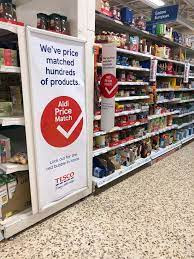
Tesco have really strong levers through the Aldi price match, low everyday prices and Clubcard prices
He also noted that it was offering competitive prices on thousands of household and beauty items to stop customers from going to fast-growing chains such as Home Bargains and B&M.

“We plan to make sure we stay close to the situation and offer no reason to go anywhere else from a price competition point of view,” Murphy said. “That’s our commitment and that’s unwavering regardless of what happens in the market.”

He declined to say whether the business would be cutting prices further or be forced to increase them.

“We stay close to our suppliers and work with them to manage their input inflation but we are very rigorous about making sure that we don’t accept any cost that would be unnecessary."

The bleak outlook sent shares in all the listed grocery retailers tumbling and comes just a week after Morrisons cautioned that its sales and profits would be affected by geopolitical and inflationary pressures.

Sainsbury’s shares lost 2.5%, whilst Marks & Spencer shares tumbled 2.1% and Ocado’s slipped 2.6%.

Shore Capital retail analyst Clive Black downgraded his recommendation for Tesco from ‘buy’ to ‘hold’, and added that if the supermarket catches a cold he would expect others to catch ‘influenza’.

AJ Bell financial analyst Danni Hewson added: “There is a real risk that cash-strapped families will cut back on their shopping and if this trend does play out as expected, it won’t just be Tesco feeling the pain.”

NamNews Implications:
  • Aldi price match, low everyday prices and Clubcard prices will help fight the other mults…
  • Meanwhile, Tesco determination to offer no reason to go anywhere else from a price competition point of view…
  • …spells continuing price war in 2022…
  • …no matter what happens in the market.
  • Listed retailers fell approximately 2% yesterday, reflecting inflation and other market factors.
  • Meanwhile, little/no mention of discounters’ ability to fund UK price cuts via global businesses to grow share…
#PriceWars #Inflation #DiscounterShare

Friday, 8 April 2022

Owner Of Morrisons Offers To Sell Petrol Stations To Ease Competition Concerns

Clayton, Dubilier & Rice (CD&R) has offered to sell several of its petrol stations to gain final clearance for its acquisition of Morrisons. The Competition and Markets Authority (CMA) launched a Phase 1 investigation into the £7bn private equity deal back in January.

Whilst the takeover has already been completed, the regulator had ordered all parties to remain separate and hold off on integration plans until its probe had taken place.

Concerns centred around CD&R also owning the Motor Fuel Group (MFG), the largest independent operator of petrol stations in the UK with 921 sites under brands such as Esso, BP, Shell, Texaco, Jet and Murco. Meanwhile, Morrisons operates 339 petrol stations, the vast majority of which are located at its supermarkets across the country.

The CMA announced last month that it found the deal raises competition concerns in relation to the supply of petrol and diesel in 121 local areas across England, Scotland and Wales. These are all areas in which MFG and Morrisons both have petrol forecourts and would face only limited competition after the merger, meaning that the deal could lead to an increase in prices.

Facing the prospect of a full Phase 2 investigation, it was announced yesterday that CD&R has now offered to divest a number of the petrol stations to gain approval for the takeover.

While the competition watchdog did not disclose how many sites the private equity firm was offering to sell, it said: “There are reasonable grounds for believing that the undertakings offered by CD&R, or a modified version of them, might be accepted by the CMA”.

Similar concerns were raised when the Issa brothers bought Asda due to their ownership of the EG forecourt empire. The CMA eventually forced them to sell 27 petrol stations to get the Asda deal across the line.

Recent reports have suggested that CD&R wants to sell off the entire MFG business via a £5bn auction, with another private equity firm the likely buyer.

NamNews Implications:
  • A no-brainer decision (given the stakes involved…)
  • Therefore proactive suppliers (and retail rivals) will have already factored this outcome into their trade strategies…
  • …hopefully.
  • Meanwhile, a what-if re CD&R selling off the entire MFG business via a £5bn auction is worth conducting.
  • NamNews subscribers See 'Moving from Managing a Traditionally Owned to a PE Owned Mult'
#Petrol #Competition #PrivateEquityOwnership

Tuesday, 29 March 2022

Grocery Shoppers Turning To Own Label And Discounters As Inflation Bites

The latest market data from Kantar shows that grocery price inflation has hit its highest level in 10 years, with consumers appearing to be adjusting their shopping habits to save money.

Take home grocery sales fell 6.3% over the 12 weeks to 20 March as people continued returning to eating out of the home again. Sales were still up versus two years ago, although only by 0.7% as the comparison now includes the record buying seen before the first lockdown.

“What we’re really starting to see is the switch from the pandemic being the dominant factor driving our shopping behaviour towards the growing impact of inflation, as the cost of living becomes the bigger issue on consumers’ minds,” said Fraser McKevitt, head of retail and consumer insight at Kantar.

Over the latest four weeks, grocery price inflation reached its highest level since April 2012 at 5.2%. Prices rose fastest in markets such as savoury snacks and pet food.

McKevitt commented: “More and more we’re going to see consumers and retailers take action to manage the growing cost of grocery baskets. Consumers are increasingly turning to own-label products, which are usually cheaper than branded alternatives. Own-label sales are down in line with the wider market but the proportion of spending on them versus brands has grown to 50.6%, up from 49.9% this time last year.

“Meanwhile, the grocers are also adapting their pricing strategies in response to the rising cost of goods. One trend we’re already tracking is the move away from selling products at ‘round pound’ prices. The percentage of packs sold at either £1, £2 or £3 has dropped significantly from 18.2% last year to 15.9% this March.”

Despite Covid loosening its grip on day-to-day grocery habits, Kantar highlighted that some pandemic trends are proving stickier than others. The acceleration of online shopping over the last of years appears to have resulted in the permanent enlargement of the channel. 12.6% of sales were made online in March 2022 compared with only 8% three years ago. Shoppers over the age of 65 are leading the charge with the proportion of this demographic buying online having doubled from 9% to 18% over the past three years.

NamNews Implications:
  • Actual inflation of 5.2% morphing into perceived inflation of something close to 10%…
  • …in terms of the effect on shopping behaviour.
  • Continued uncertainty (about most things) driving switches to own label and the discounters.
  • Real issue: Aldi & Lidl now have a share of market growth window…
  • …whereby they can each afford (as global retail players) to run losses in the UK…
  • …for as long as it takes to increase their share of grocery as much as they want.
  • (Note the ‘oldies’ buying into the convenience of online delivery, a trend that can only increase as the population ages)
#StickyChanges #Discounters #GlobalPortfolioManagement

Friday, 25 March 2022

Study Suggests Consumers Are Uneasy About H&B Brands Supporting Woke Causes

 According to new research, two-thirds (68%) of consumers are uneasy or unsure about health & beauty brands teaching and promoting ‘woke’ causes.


The survey was commissioned by The Pull Agency, a creative agency specialising in healthcare and beauty brands. It also found that when it comes to Corporate Social Responsibility (CSR), what most people (58%) want is for health & beauty brands to ‘pay their taxes, treat people fairly, respect the environment and not use it as a PR opportunity’.

Nearly half of the UK consumers (41%) agreed that the amount of ‘green-washing’ and ‘woke-washing’ in the health & beauty sector (brands faking their sustainability credentials or their interest in social issues) is becoming noticeable.

A quarter (26%) think those brands come across as inauthentic as a result, while one in seven (14%) deliberately avoid the brands they see as behaving this way.

The survey suggested that being an ethical corporate citizen is what consumers want most from health & beauty brands, rather than the in-vogue focus on brand purpose, such as showing support for a social justice purpose like climate change, LGBTQ+ rights or diversity and inclusion. In fact, the study highlighted that only 22% of UK consumers are familiar with the term ‘brand purpose’, while 37% think they’ve heard of it, but admit they don’t really know what it involves.

Kathrin Rodriguez-Bruessau, head of brand strategy at The Pull Agency, commented: “While the marketing world would have us believe that a grandiose brand social purpose is paramount, consumers don’t seem to care as much or really understand the concept. According to most people, the first step is to just get the basics right and be a decent corporate citizen.

“Trying to be more than an ethical business actually carries risks. Several healthcare and beauty brands have got in trouble for perceived woke-washing and superficial attempts at brand activism. People are getting much smarter at identifying what’s real and what’s not and clearly irritated by inauthentic looking claims.”

NamNews Implications:
  • Key to remember that most consumers emerging sane from two years of unprecedented Lockdown…
  • …are super-savvy i.e. thinking and speaking for themselves.
  • Part of this is being able to see thru blunt PR…
  • They also want nothing less than demonstrable value for money.
  • More importantly they are more than capable of operating a social-media driven, Tell-a-Friend campaign…
  • Handle with care!
#SavvyConsumer #ValueForMoney #Genuine #Sincere

Tuesday, 22 March 2022

Asda Set To Introduce New Budget Range And Continue Simplification Drive

Asda is launching a major price repositioning that will involve the rollout of a new budget range and further SKU simplification.

According to trade magazine The Grocer, the new own-label offering will be called ‘Just Essentials by Asda’. It will cover around 300 products including items such as beans, bread, crisps, and biscuits as well as non-food lines such as washing-up liquid and laundry powder.

Asda said the move was aimed at appealing to price-sensitive customers facing a cost-of-living crisis as inflation soars, although it stressed that it would also emphasise the quality of the new range.

Analysts have suggested that Asda has lost some of its price competitiveness under the ownership of the Issa brothers and TDR Capital. The business recently faced criticism from anti-poverty campaigner Jack Monroe for raising the price of essentials and the lack of coverage of its existing Smart Price and Farm Stores value ranges.

However, The Grocer noted that the speed of the planned roll-out has caused concern among own-label suppliers, some of whom have questioned whether it is possible to launch such a major proposition in a short space of time.

The new range is expected to replace Asda’s Smart Price offering, with the supermarket saying ‘Just Essentials’ will be a “bold, upbeat and positive brand”.

Asda had planned to start rolling it out from May but said: “We want to do it faster because it’s really important for our customers that we are with them all the way.”

The Grocer report also said that a recent presentation to suppliers by the supermarket revealed plans for a wider range reset which will see further SKU cuts on top of those carried out during the pandemic. The retailer said the simplification process would ensure there were no more than three iterations of the same product.

Asda also wants to simplify its promotions strategy, with no product promoted more than three times in any 12-month period.

The report added that the Issa brothers were also planning an overhaul of Asda’s stores and the rollout of its Rewards loyalty scheme that has been undergoing trials in 16 supermarkets.

NamNews Implications:
  • Aimed at those facing an inevitable cost-of-living crisis as inflation soars, without compromising quality.
  •  i.e. If this “bold, upbeat and positive brand” hits these notes…
  • …it has to find a market.
  • Rolling it out faster than the planned May launch could cause logistical problems…
  • …therein an opportunity for rivals?
#AsdaPace #CostOfLiving

Friday, 18 March 2022

Head Of JLP Says UK Is Facing Double-Digit Inflation

The Chairman of the John Lewis Partnership (JLP) has joined the growing number of business executives and politicians warning that the UK is heading towards double-digit inflation as the war in Ukraine adds to cost pressures already being felt across numerous industries.

UK inflation is already at a 30-year high of 5.5% and is expected to rise to almost 8% next month as energy bills soar.

Speaking on the BBC’s Radio 4 Today programme, Sharon White said: “Everything you can see in terms of energy prices from the impact of the Ukraine war suggests that we might well end up with double-digit inflation. My big worry is that it ends out being more enduring than anyone expects. So I think inflation is the big macroeconomic washout.”


NamNews Implications:
  • ‘UK is heading towards double-digit inflation…’
  • And this from an ex-government economist (Sharon White).
  • NB. Keep in mind that ‘double-digit’ starts at 10%…
  • Meanwhile, bankers are suggesting that, as high inflation will be temporary, workers will be tolerant on the impact on their living standards…
  • In your dreams…
  • And BTW, for those that feel that weakened Unions are in no position to negotiate…
  • …we could find that inflation already in the pipeline could breed effective resistance on the shop floor.
  • ...especially if inflation hits 10%!!
#'HyperInflation' #pipeline #bankers #energy

Monday, 14 March 2022

Fertiliser Crisis Could Lead To Food Shortages And More Price Rises

Farmers in the UK are facing the prospect of fertiliser rationing because of the war in Ukraine, which could lead to shortages of some foods in supermarkets and further inflationary pressure.

Russia is the world’s biggest exporter of fertiliser that is essential for growing crops and grass for cattle. Last week the EU imposed sanctions on three large producers, Eurochem, PhosAgro and Uralchem.

According to The Times newspaper, some fertiliser merchants have temporarily closed their order books because of a lack of supply while others are rationing the amount that farmers can buy. The UK imports around 60% of its fertiliser.

NamNews Implications:
  • Understatement of 2022?
  • The cost of fertiliser has also quadrupled in the past year from about £250 a tonne to nearer to £1,000 due to rising gas prices.
  • (and that before the Ukraine crisis…)
  • Moreover, the squeeze on fertiliser supplies is expected to limit the scope for substitution of lost Ukraine wheat production by other countries.
  • Time to try some what-ifs based on 10% and 15% inflation…
#HyperInflation #ShortSupply


Friday, 11 March 2022

JLP 'never knowingly underinflated' Raises Inflation Concerns

After hailing the success of its recovery programme yesterday, the head of the John Lewis Partnership added to warnings from across the retail and manufacturing sectors that Russia’s invasion of Ukraine will lead to a further jump in inflation.

Chairman Sharon White said that the conflict meant inflation would be “more persistent” and at a higher rate than previously expected.

She highlighted that the group was facing “significant persistent pressures” on costs, adding: “As far as we can, we’re trying to absorb the cost pressures … not all of these pressures are absorbable.”

Both the group’s Waitrose and John Lewis chains have been forced to increase prices on certain items in recent weeks, with prices at the supermarket chain rising by between 3% to 4% compared with 2% last year.

White said: “We’re expecting inflation to be more permanent, more persistent, and certainly at a higher level than when we were all gathered for half-year results [in September].

NamNews Implications:
  • '…invasion of Ukraine will lead to a FURTHER jump in inflation’
  • The key word is ‘further’ …
  • …in that most of the current inflation predictions (everywhere) are based on pre-Ukraine trends.
  • i.e. ‘prices at the supermarket chain rising by between 3% to 4%’ are ‘historical, pre-Ukraine.
  • We are now in uncharted territory, again (following Covid Lockdowns…)
  • Given the risk that JLP will be 'never-knowingly-underinflated' suppliers need to take the initiative.
  • Waitrose suppliers need more precision re inflation…
  • …and should explore ‘what-ifs ‘ starting at 10%…
  • …before opening discussions with the customer.
  • In other words, the supplier has to take the lead this time…
#UkraineInflation #NormalInflation #NAM-Initiative

Sunday, 6 March 2022

Grocery Price Inflation Accelerates; Discounters Gaining Share

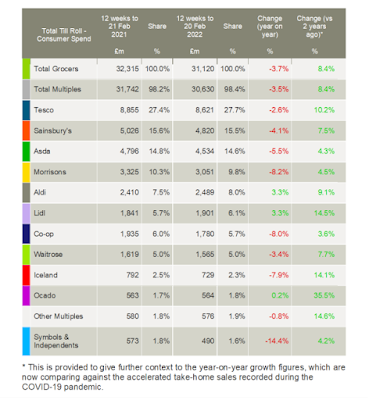
Latest industry data confirms that prices in the grocery sector are continuing to rise, with further upward pressure likely to come from the conflict in Ukraine. With the market still contracting from last year’s pandemic-driven highs, Aldi and Lidl were the only physical retailers seeing growth and gaining share on the main multiples, apart from Tesco.

Take-home grocery figures from Kantar show that overall supermarket sales fell by 3.7% during the 12 weeks to 20 February in comparison with last year when the winter lockdown meant people were eating more meals and snacks at home.

However, sales remain 8.4% higher than the same period before the pandemic in 2020.

NamNews Implications:
  • With the global Covid fears/uncertainties now replaced by Ukraine worries, consumers are spending cautiously...
  • ...despite increasing their work-driven on-the-go consumption.
  • Time for suppliers to justify why they are not optimising their potential business with the discounters?
  • Especially given that Tesco and Ocado are the only other retailers growing at the expense of the rest…

#OnTheGoConsumption #FearUncertainty #Inflation

Wednesday, 2 March 2022

Sainsbury’s Closing Cafes As It Overhauls Eat-In And Takeaway Food Offer

Sainsbury’s is set to close 200 of its in-store cafes and some of its hot food counters as part of an overhaul that will see it roll out its new Restaurant Hub food hall format.

The retailer stated that it wants to transform its eat-in, takeaway and home delivery food and drink offer to give customers a better experience. Sainsbury’s has been trialling The Restaurant Hub concept at its Selly Oak store in Birmingham in conjunction with the Boparan Restaurant Group (BRG). It features a range of restaurant brands, including Caffè Carluccio’s, Gourmet Burger Kitchen, Ed’s Diner, and Slim Chickens.

The two companies are planning to open 30 more The Restaurant Hubs in the next year, with the intention to accelerate the roll-out if the format proves popular.

Sainsbury’s will also open another 30 Starbucks coffee shops in its supermarkets in the next twelve months, bringing the total number to 60. Working with BRG and Starbucks, Sainsbury’s plans to overhaul its offer in 250 supermarkets over the next three years

NamNews Implications:
  • Lockdown and Takeaways says it all…
  • But one of many fundamental shake-outs arising.
  • Benefits for those businesses that can recognise the change, and act decisively…
  • How about you?
[Just one of 12 news items in today's NamNews bulletin]

#LockdownDamage #HospitalityChange

Monday, 28 February 2022

Tesco’s Price Matching Scheme Now Following Aldi’s Price Rises

Amid soaring food prices, Tesco’s ‘Aldi Price Match’ scheme has gone into reverse.

The scheme had originally been conceived as a way of Tesco improving its competitiveness by cutting prices on everyday products to match Aldi to halt shoppers switching to the discounters.

According to trade publication The Grocer, Tesco is now raising the price of matching lines to keep up with increases at Aldi.

The report noted that Tesco’s determination not to let the pressure off the discounter despite cost inflation, meant Aldi was raising prices on some price-matched lines ahead of an identical increase by the supermarket giant. This has meant that Aldi was briefly more expensive than Tesco on some lines involved in the scheme.

NamNews Implications:
  • All depends on shopper perception.
  • The real bargain-hunters will capitalise on some of the Tesco price-lagging…
  • But in general, most shoppers will simply ‘see’ the Aldi Price Match initiative in action…

Wednesday, 23 February 2022

GSK Unveils New Name For Consumer Healthcare Spin-Off

GlaxoSmithKline (GSK) has revealed that its Consumer Healthcare business will be called Haleon following its planned spinoff and stock market listing this summer.

The name, pronounced “Hay-Lee-On”, was inspired by the merging of the words ‘Hale’, which is an old English word that means ‘in good health’ and Leon, which is associated with the word ‘strength’.

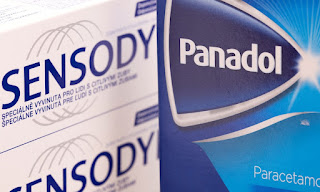
The demerger of the Consumer Healthcare business is planned to take place by mid-2022, creating a standalone entity with sales of around £10bn from brands such as Sensodyne, Voltaren, Panadol and Centrum.


Once separated from GSK’s pharmaceuticals and vaccines operations, the new company will be led by the unit’s current Chief Executive Brian McNamara and recently appointed Chairman Designate Sir Dave Lewis, the former boss of Tesco. Haleon will be headquartered at a new campus in Weybridge, which is expected to open at the end of 2024 and will include an R&D centre and a shopper science lab.

NamNews Implications:
  • Combination of new name and ‘separate’ existence, ‘independent’ of group…
  • …means more focus on consumer optimisation.
  • Time for rivals to reassess relative competitive appeal…

Thursday, 17 February 2022

Price Rises Drive Growth At Nestlé, With More To Come

The world’s largest food manufacturer has posted its strongest growth in developed markets in a decade as it benefitted from price rises and robust demand for coffee, pet food, and vegan products.

Over the year to 31 December, Nestlé’s sales rose 7.5% on an organic basis to CHF87.1bn (€83.2bn), of which 2% came from price increases to offset “significant cost inflation”. This trend accelerated in the final quarter of the year, with prices up 3.1%.

The group stated that growth was also supported by continued momentum in retail sales, a steady recovery of out-of-home channels, and market share gains.

Nestlé’s coffee business was the single largest contributor to growth in 2021. Sales of Starbucks-branded products jumped 17.1% to CHF3.1bn, whilst the Nespresso division reported growth of 8.8% to CHF6.4bn


NamNews Implications:
  • Nestlé is big enough in most markets to be able to ensure appropriate price rises across its brand and retail portfolios.
  • “Significant cost inflation” has been factored into its price increases…
  • …in a “super volatile environment”.
  • Rivals need to reassess relative competitive appeal, by category, retailer and geography…
  • ..Now
#ShelfPriceInflation #CostPriceInflation #Negotiation #Power

Tuesday, 15 February 2022

Sale Of MFG Moving Forward

Following recent rumours, it appears that the £5bn sale of Motor Fuel Group (MFG), the forecourt operator controlled by the new owners of Morrisons, is going ahead.

According to Sky News, Clayton, Dubilier & Rice (CD&R) has lined up Citi, Deutsche Bank, Goldman Sachs, and Royal Bank of Canada to sell MFG, which operates around 900 sites across the UK.

MFG has grown substantially since CD&R bought it in 2015 for £500m. Three years later, the private equity firm paid £1.2bn to add MRH, the market leader, creating a group operating under fuel brands such as BP, Esso, Shell and Texaco.

MFG’s profits are understood to have risen about tenfold since CD&R’s acquisition with the company investing heavily in its convenience retailing proposition, featuring the likes of Costa Coffee, Greggs and Subway at many of its sites.

NamNews Implications:
  • MFG will be an attractive acquisition for either fuel companies or PE.
  • Either way, any supplier-MFG relationships will be financially driven…
  • …in order to maintain the profit impetus.
  • Therefore NAMs need to refine their skills in counting cost…
  • …and demonstrating the value of their proposals to MFG’s finances.
#Divestment #FinancialKPIs #GarageForeCourt

Friday, 11 February 2022

Morrisons Introduces Plastic-Free Toilet And Kitchen Roll Packaging

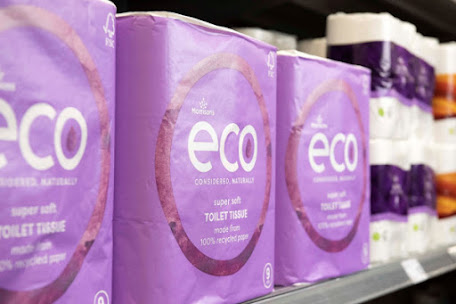
Morrisons has launched paper-wrapped toilet and kitchen rolls as part of its drive to reduce plastic waste.

The paper packaging, which is responsibly sourced and FSC certified, is fully recyclable with the toilet paper and kitchen sheets themselves are also made using recycled paper.

Morrisons jumbo kitchen rolls cost £3 (for a two pack) and the toilet rolls £3.50 (for a nine pack). The retailer highlighted that this is much cheaper than some other eco paper-wrapped products which can be as high as £2.80 for a single kitchen roll and £9 for nine toilet rolls.

NamNews Implications:
  • Given the extent to which tissue is a narrow-margin business…
  • …this pricing differential is going to be problematic…
  • …at least for suppliers.
#BrandOwnLabelPremia #TissueProfitability #ScaleEconomies

Wednesday, 9 February 2022

Amazon Must Now Comply With GSCOP


Amazon’s increasing activity in the UK grocery sector has led the Competition and Markets Authority (CMA) to designate the online giant under the Groceries Market Investigation Order (the Order).

As a result, Amazon and its UK subsidiaries must now comply with the Groceries Supply Code of Practice (GSCOP).

The Code applies to retailers with an annual turnover of more than £1bn from grocery sales and aims to ensure that they treat their suppliers fairly.

NamNews Implications:
  • Key is the extent to which Amazon feels responsible for the actions of all of its vendors…
  • All else is detail...
#GSCOP #AmazonCompliance #AmazonEntersMainstreamRetail

Amazon Sales In The UK Up 82% On Pre-Pandemic Levels

An annual report SEC filing by Amazon last week shows just how popular the online retailer became in the UK during the pandemic. 

Over the year to 31 December 2021, Amazon’s net sales in the UK rose 20.5% to $31.9bn (£23.6bn). However, compared to two years ago before the start of the pandemic, the figure is up 82.1% from $17.5bn (£13.0bn).

Patrick O’Brien, research director at GlobalData, commented: “While other major digital players appear to have peaked earlier in the pandemic, UK consumers show little let-up in their reliance on Amazon. It’s a very strong performance against an exceptional comparative.”


NamNews Implications:
  • No surprises, hopefully…
  • Given their high degree of customer-centricity.
  • And saturation coverage.
  • Trickling down into cost-effective fulfilment.
  • With rivals trailing behind.
  •  Best for suppliers to be on board optimising this mix…
  • …rather than trying to build up Amazon rivals in order to spread risk.
#AmazonResults #OnlineOnwards

Friday, 4 February 2022

Amazon Hikes Price Of Prime Membership In US To Offset Rising Costs

The price for annual membership is rising by 17% to $139, with the online giant blaming increased labour and shipping costs. The group stated that it had no announcements to make about other countries “at this time”.

NamNews Implications:
  • As always, nothing is for nothing…
  • And pipeline cost increases have to be reflected in prices, eventually…
  • Unlikely that these increases will diminish Amazon Prime appeal…
  • …given the convenience.
#amazon #PrimePriceIncrease

Wednesday, 2 February 2022

Shop Prices Rise At Fastest Pace Since 2012

The latest BRC-NielsenIQ Shop Price Index confirms that inflation is accelerating in both the food and non-food retail sectors.

The overall figure rose from 0.8% in December to 1.5% in January, the highest rate of inflation recorded by the index since December 2012.

Official figures last month showed that wider consumer inflation jumped to 5.4% in December, the highest rate for 30 years, driven up by higher energy costs and rising retail prices.

The BRC and NielsenIQ figures are based on price changes of commonly bought items in retail stores. They showed that food inflation increased from 2.4% to 2.7% in January, the highest inflation rate since October 2013.

NamNews Implications:

  • From a NAM’s POV, the issue is how consumers view ‘real’ on-shelf inflation.
  • i.e. inflation that affects their purchasing behaviour and hence demand.
  • And street-level inflation is perceived to be running at 5%-10%, with more to come…
  • And any action by the Bank of England to curb inflation will be a further deterrent to spending…
  • See 'Pound-in-your-pocket Inflation' for more details

#PoundInYourPocketInflation

Monday, 31 January 2022

Businesses Braced For Insolvency Storm As Pandemic Aid And Protection Is Shut Off

589,168 businesses in the UK reported significant financial distress during the final quarter of 2021, a 5% rise on the previous three months.

This is according to Begbies Traynor’s ‘Red Flag Alert’ (monitors financial health of UK companies). The latest research shows Lockdown fault lines.

Data indicates that the debt storm which has been brewing for years, but had been held off by measures to provide breathing space for companies, could now be about to hit, sending shockwaves through many industries.

Julie Palmer, a partner at Begbies Traynor, said: “Businesses that have bravely battled through the pandemic could now start to fail as the pressures they face become too much. Support from the Government such as furlough payments, tax reliefs and a moratorium on landlords being able to evict businesses due to rent arrears cannot go on forever.

“Without these measures in place to protect them, a rising number of companies will have no other option but to relinquish their business after two years of struggling on in the economic uncertainty that has been tempered by measures to combat the impact of coronavirus.

“The lag effect of the economic fallout from Covid, plus significantly higher inflation, has created a perfect economic storm for many companies, particularly the UK’s SME sector, which will undoubtedly drive insolvency rates even higher.”

Inflation is now the greatest threat to the economy with the true rate potentially running far beyond the official 5.4% rate and possibly many multiples more than the Bank of England’s target of 2%. Rising wage, energy and materials costs mean the CPI figures are showing only part of the story in the UK and the subsequent impact on the public’s disposable income is expected to be far greater.

Despite Government support measures unwinding, Palmer said there are indications that the authorities are willing to help businesses that are trying to fight on. She added: “Anecdotally, we are hearing stories about HMRC giving companies two or even three years to pay their tax bills.

“Extra leniency may not be an official policy, but it sends a signal that officials are trying to help businesses survive – even though it might only be delaying the inevitable.”

NamNews Implications:
  • We repeat: ‘589,168 businesses in the UK reported significant financial distress during the final quarter of 2021, a 5% rise on the previous three months’.
  • This is going to affect your business, in terms of customers and rivals.
  • To place the issue in context, calculate the incremental sales required to replace your losses from a customer:
  • i.e. Divide outstanding credit by your Net Profit before Tax %, and multiply by 100.
  • Then apply this formula to each customer you manage…
  • (Meanwhile, furlough payments, tax reliefs and a moratorium on landlords being able to evict businesses due to rent arrears cannot go on forever)
  • What now Boris?

Friday, 21 January 2022

Princes Moves Into The Frozen Aisle

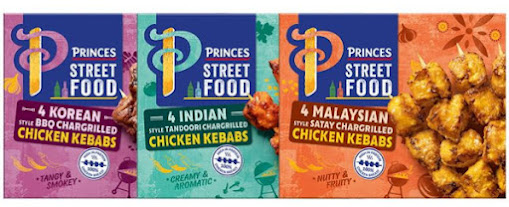
Princes, the company best known for its canned food, is making its debut in the frozen aisle with a new range of meat kebabs.

Called Princes Street Food, the range of frozen marinated kebabs comes in three flavours: Indian Tandoori Chargrilled Chicken Kebabs, Korean Style BBQ Chargrilled Chicken Kebabs and Malaysian Style Satay Chargrilled Chicken Kebabs (RSP: £3.75/260g).

NamNews Implications:

  • Princes is coming to this category…
  • ...without the baggage of a pre-HFSS product having to be reformulated (taste/texture).
  • - with no history other than canned.
  • - i.e. a clean slate and no preconceived notions.
  • From there, anything is possible...
  • And provided the spec and execution resonate with consumers (and trade), and always delivers more than it says on the 'tin'…
  • …this could be interesting.

#CleanSlateMarketing #ScratchMarketing

Tuesday, 18 January 2022

Aldi Opens Doors To New Checkout-Free Concept Store


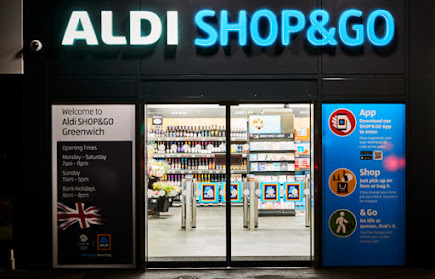
The Shop&Go concept store in Greenwich, London opened this morning for public testing, having been trialled by Aldi staff in recent months.

Using the Aldi Shop&Go app, customers can enter the store, pick up their items, and then walk out when they have completed their shop. Once the customer leaves the store, they will then be automatically charged for their shopping via their selected payment method and a receipt will appear in the app.

NamNews Implications:
  • The tech is already here…
  • …along with the cost-saving on personal checkout operators.
  • (to say nothing of all that shopper data…)
  • So think ahead to an inevitable life of fully automated checkout process, everywhere…
  • Whilst Aldi maintain the same price-differential…
  • …and discounter advantage.
#AutomatedShop #FrictionlessShopping #AldiCompetitiveAdvantage

Friday, 14 January 2022

Tesco Commits To Keeping Prices Down, With Help Of Suppliers

The pledge by Tesco – echoing that of Sainsbury’s, Lidl and Aldi in recent days – suggests the sector faces a price war at a time when suppliers are looking to pass on higher commodity and supply chain expenses.

Tesco stated that it will try to mitigate inflation for consumers through its cost-saving programme. The retailer also plans to buy stock in larger volumes and vowed to work collaboratively with suppliers to keep down prices.

NamNews Implications:
  • One could say that in keeping prices down for the past 10 years…
  • …state-of-art retailers have exhausted all slack in the efficiency system…
  • …meaning there is little further scope for squeezing savings.
  • Besides which, as suppliers know, scale purchasing can rarely translate into significant price discounts..
  • Meanwhile, with very real inflationary costs already in the system…
  • …the market has to move prices in tandem, obviously by instinct rather than by discussion.
  • In which case, it only takes one retailer holding back on price increases to gain a real competitive advantage…
  • (Say a discounter large enough to lower profits at the expense of its global portfolio)
  • i.e. Hold onto your hats, folks!

#Inflation #Competition #SupplierFairShare #GSCOP


Tuesday, 11 January 2022

Aldi Won Christmas On Social Media

Analysis by Social Media Management platform Maybe* ranked the major supermarkets according to those who most successfully engaged customers from social media posts across Facebook, Twitter and Instagram.

The analysis showed that whether it was gin or caterpillar shaped birthday cakes, Aldi led the way throughout 2021 in the social media stakes with its ongoing disputes with Marks & Spencer.

NamNews Implications:
  • Humour: a high-risk, high payoff strategy.
  • Requires careful handling, reader-insight, and generosity...
  • …but ‘Bingo’ if it strikes a chord.
  • (and is worth/easy to pass on/re-share)
  • We are entering even more serious, inflationary times...
  • ...but well-placed humour has to pay dividends.
  •  But it needs to translate to sales, rather than simply leave a warm glow...
  • (but feeling better helps!)
#Controversy #competition #Humour

Friday, 7 January 2022

Recovery Continues At Boots Ahead Of Potential Sale

Walgreens Boots Alliance (WBA) raised its full-year profit guidance yesterday after both its US and UK businesses delivered better-than-expected sales performance during its first quarter, aided by vaccination activity and surging online sales.

In the UK, comparable retail sales at Boots jumped 16.3%, recovering from the significant declines last year when its high street and travel sites were impacted by lockdowns, and shoppers turned to supermarkets for their health & beauty needs.

NamNews Implications:

  • Clearly the future of Boots lies in success online…
  • (and optimising their consumer franchise in terms of patient/healthcare)
  • Especially given the assessment anticipated from Private Equity companies.
  • Meanwhile, suppliers proposing online-based initiatives will have the most appeal in the current situation…

#BootsTakeover #BootsFuture

Wednesday, 5 January 2022

Tesco And Discounters Best Performers Over Christmas Period; Supermarkets See Record Own Label Sales As Inflation Accelerates

Given weaker overall sales than 2020 when Covid restrictions boosted demand in supermarkets to record levels, the market share data from Kantar showed consumers treated themselves during the festive season, but with more premium own-label ranges as inflation in the sector pushed up the cost of grocery shopping.

NamNews Implications:
  • Note Tesco Finest & Sainsbury’s Taste the Difference as premium O/L performers
  • (particularly if you subscribe to the belief they are better than National Brands…)
  • Also ‘grocery price inflation reached 3.5% in December’ as a rehearsal for Inflation-2022!
  • …driving discounter share growth resulting from an inevitable discounter-driven price war.
  • As always, key is how your Christmas sales compared, by format and category.
#LatestGroceryShares #ChristmasTrading2021

Tuesday, 7 December 2021

Consumers Buying More Premium Own-Label Ranges Despite Rising Prices; Tesco And Discounters Gain Share

All the major grocery retailers in the UK saw their sales fall over the 12 weeks to 28 November against tough comparatives with last year when Covid restrictions were reintroduced. The data from Kantar also suggests that rising food prices aren’t impacting people’s desire to treat themselves over the festive period.

Take home grocery sales fell by 3.8% during the period as consumers ate out more compared with 2020. However, sales remain strong compared with the market before the pandemic, and grocery spend was 7.0% higher in the latest 12 weeks than in 2019.

NamNews Implications:
  • Key issue is growth of premium private label at the expense of equivalent national brands.
  • The fact that the quality of premium private label can be equal or even better than national brands at the same price…
  • …means better value for money…
  • …and probably a permanent shift in allegiance.
  • A backdrop of the remorseless growth of online and the discounters…
  • …where higher pipeline inflation has not really kicked in yet.
  • Means seatbelt tightening a default option for 2022…
#PremiumPrivateLabel #DiscounterShare #OnlineShare